
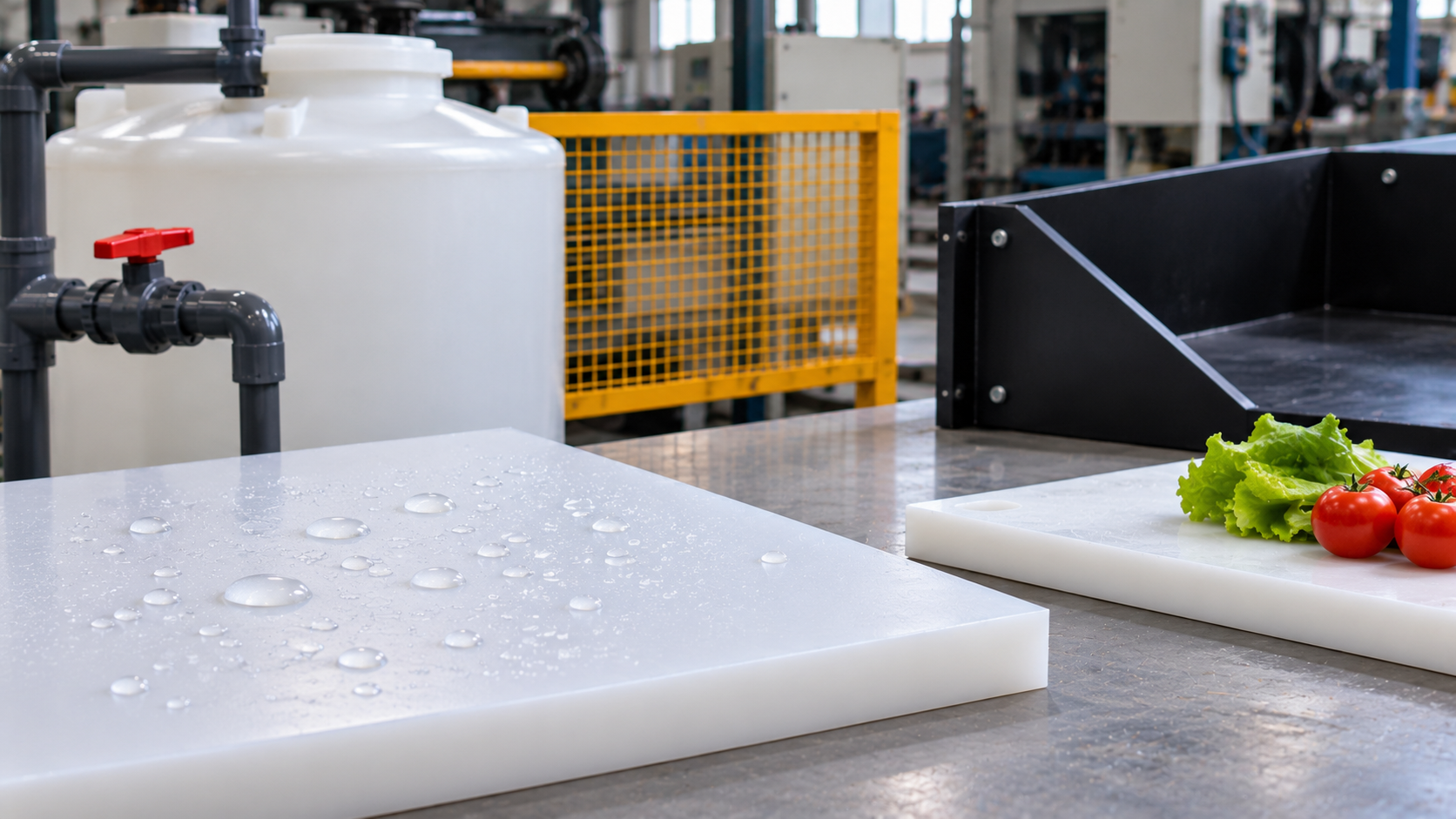
What Is HDPE? Properties, Benefits and Industrial Applications
HDPE, also known as High-Density Polyethylene, is a widely used thermoplastic material found in various industrial, commercial and manufacturing applications. Known for its strength, chemical resistance, moisture resistance and versatility, HDPE is a popular choice for businesses looking for practical plastic material solutions.
From industrial equipment and storage applications to fabrication and material handling, HDPE plastic sheets offer a combination of properties that make them suitable for different working environments.
However, choosing the right HDPE material requires an understanding of its characteristics, limitations and intended applications.
In this guide, we explore what HDPE is, its key properties, benefits, common applications and important factors to consider before purchasing HDPE plastic sheets.
1. What Is HDPE?
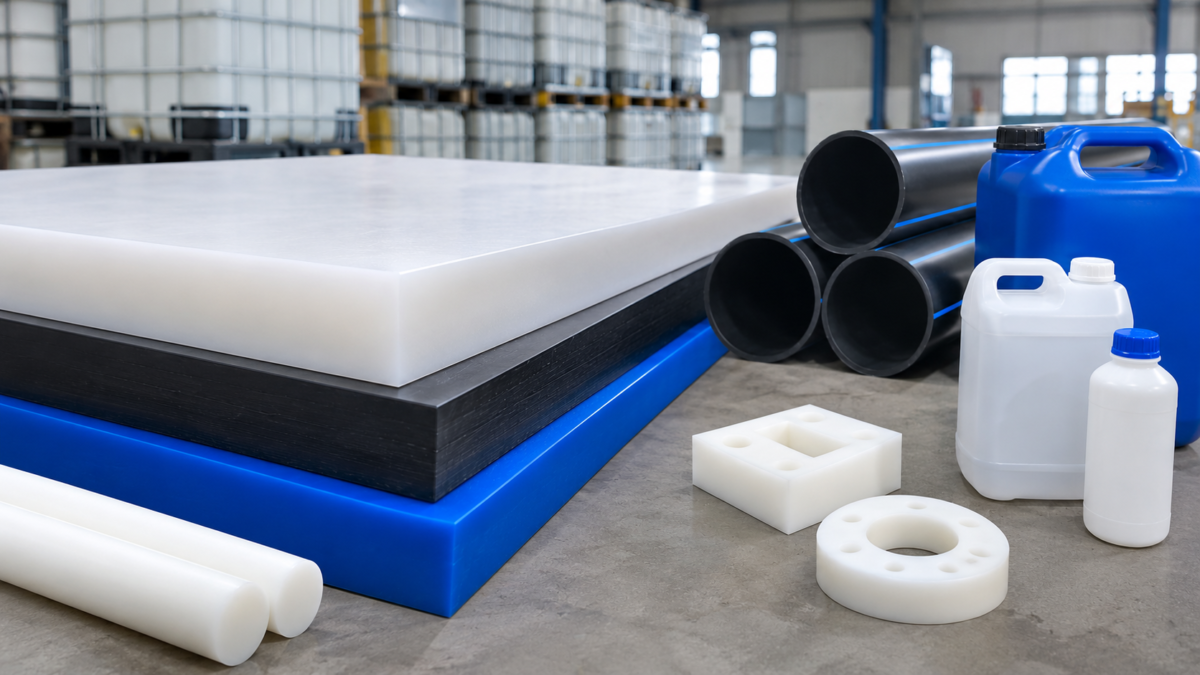
HDPE stands for High-Density Polyethylene. It is a thermoplastic polymer produced from ethylene and belongs to the polyethylene family.
Compared with Low-Density Polyethylene (LDPE), HDPE has a more linear molecular structure with less branching. This allows its polymer chains to pack more closely together, resulting in higher density, greater stiffness and different mechanical properties.
HDPE is commonly available in various product forms, including:
Plastic sheets and boards.
Pipes and fittings.
Bottles and containers.
Industrial storage products.
Fabricated plastic components.
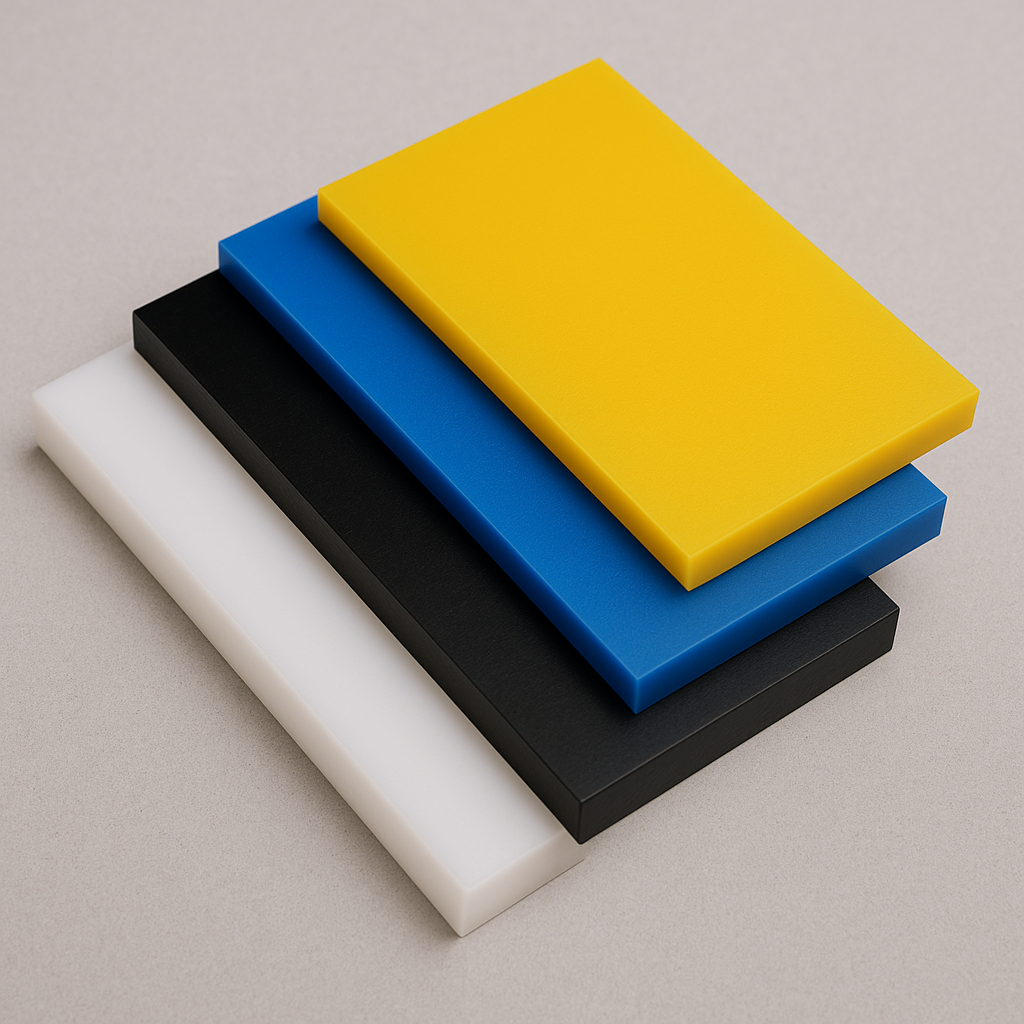
HDPE plastic sheets are particularly useful in applications that require a lightweight material with good chemical resistance, moisture resistance and mechanical performance.
2. Key Properties of HDPE Plastic Sheets
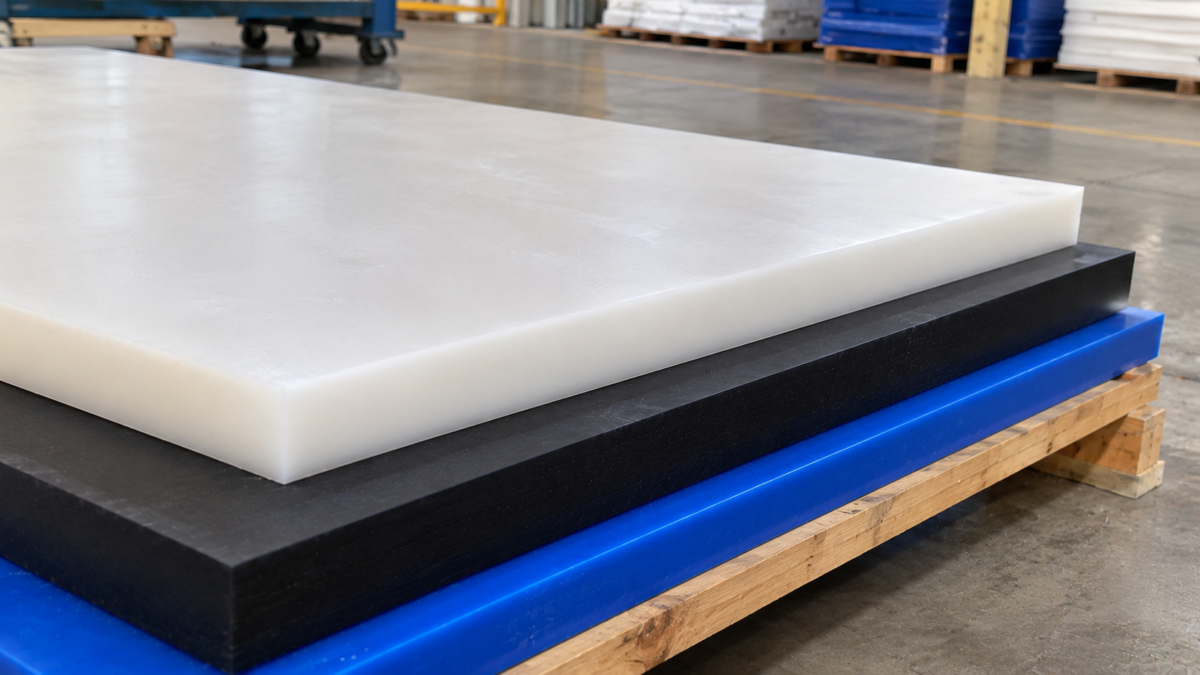
Understanding HDPE properties helps businesses determine whether this material is suitable for their industrial requirements.
High Strength and Durability
HDPE offers good tensile strength and impact resistance for many industrial applications. Its mechanical properties make it suitable for products that need to withstand regular handling and physical use.
However, its actual performance depends on the material grade, thickness, temperature and application conditions.
Excellent Chemical Resistance
One of the key advantages of HDPE is its resistance to many commonly encountered chemicals, including various acids, alkalis and aqueous solutions.
This makes it useful in selected chemical storage, industrial handling and containment applications.
Nevertheless, HDPE is not resistant to every chemical. Compatibility should be checked against the specific chemical, concentration, temperature and exposure duration.
Low Moisture Absorption
HDPE has low moisture absorption, making it suitable for applications where exposure to water or humid environments is expected.
This property also makes it useful in certain water-related and industrial applications.
Lightweight Material
Despite offering good mechanical strength, HDPE is relatively lightweight compared with many traditional materials.
Its lower weight can make transportation, handling, cutting and installation easier in suitable applications.
Good Abrasion Resistance
HDPE offers good resistance to abrasion and wear in many applications. This can be beneficial for components exposed to repeated contact, sliding or material handling.
The actual wear performance depends on the operating conditions and the specific HDPE grade.
Good Fabrication and Machining Properties
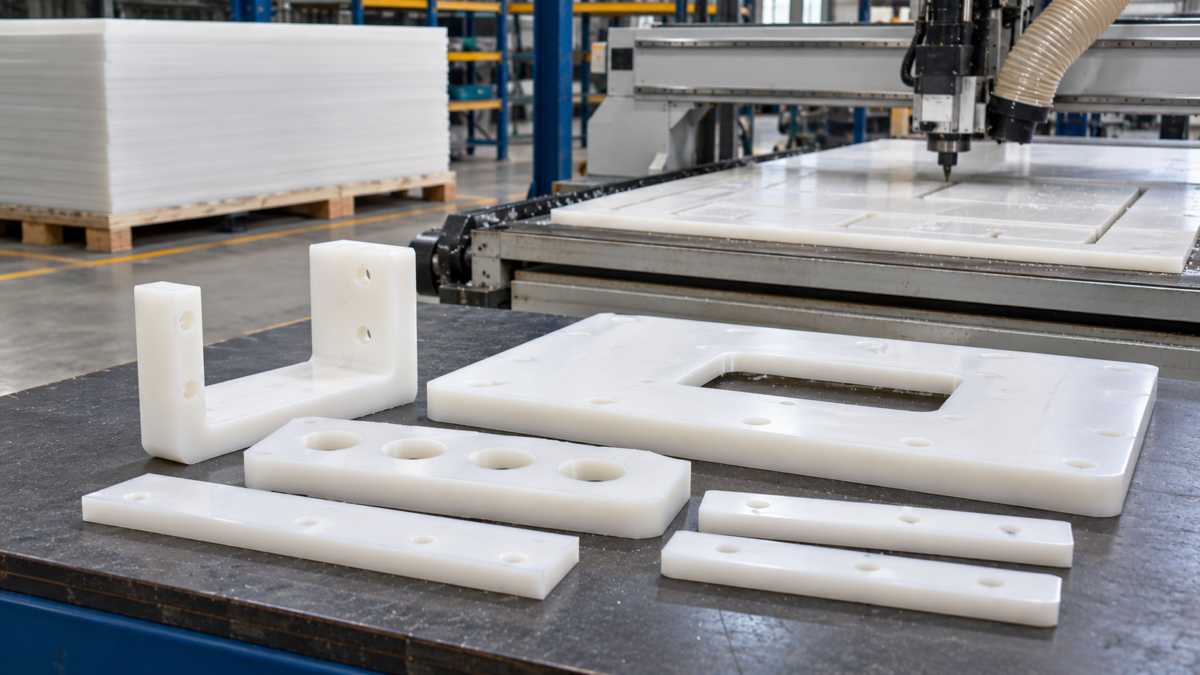
HDPE sheets can be processed using suitable plastic fabrication techniques, including cutting, drilling, routing and welding.
These properties allow HDPE to be used in the production of customised components and industrial equipment.
Electrical Insulation Properties
HDPE is an electrical insulating material and can be used in selected applications where electrical insulation is required.
Its suitability depends on the electrical, environmental and mechanical requirements of the application.
UV Resistance Considerations
Standard HDPE should not automatically be assumed to be suitable for prolonged outdoor exposure.
Long-term ultraviolet (UV) radiation can contribute to material degradation. For outdoor applications, check whether the selected HDPE grade includes suitable UV stabilisation.
Research published by the National Institute of Standards and Technology (NIST) found that prolonged exposure to UV radiation and higher temperatures can accelerate the degradation of HDPE, reducing its elongation and affecting its mechanical properties. This highlights the importance of selecting suitable UV-stabilised HDPE grades for outdoor applications.
3. What Are the Benefits of HDPE?
HDPE offers several practical advantages for industrial and commercial users.
1. Versatile Applications
HDPE can be used in various industries, including manufacturing, construction, agriculture, engineering and material handling.
2. Resistance to Moisture
Its low moisture absorption makes HDPE suitable for applications involving water and humid environments.
3. Chemical Resistance
HDPE can withstand exposure to many commonly used chemicals, subject to material compatibility and operating conditions.
4. Easy Handling
Its lightweight characteristics make HDPE easier to handle and transport compared with many heavier materials.
5. Cost-Effective Material Option
HDPE can provide a practical balance between material performance and cost for applications where its properties meet the required specifications.
6. Fabrication Flexibility
HDPE sheets can be cut and fabricated into different shapes and components to suit specific project requirements.
4. Common Industrial Applications of HDPE
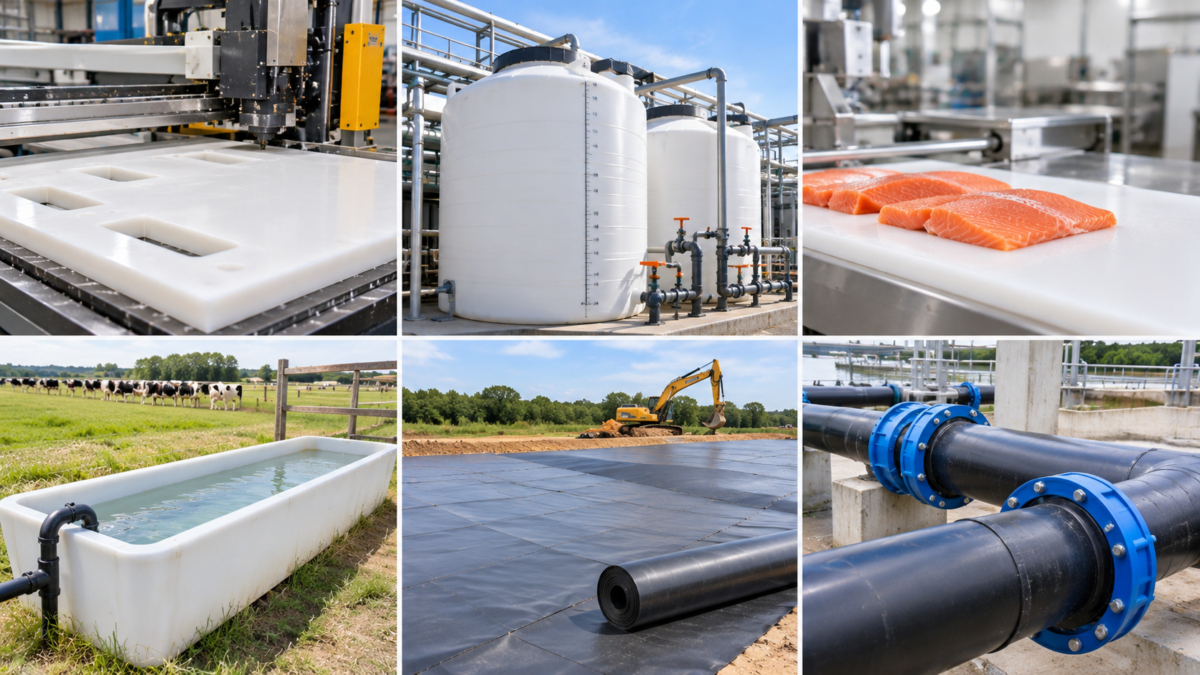
HDPE is used across different industries because of its combination of mechanical, chemical and physical properties.
Manufacturing and Engineering
HDPE sheets can be fabricated into industrial components, protective panels, machine guards and material handling parts.
Its lightweight nature and resistance to moisture make it useful in selected manufacturing environments.
Chemical Storage and Handling
HDPE is used in selected tanks, containers and chemical-handling equipment because of its resistance to many chemicals.
However, the chemical compatibility of the material must be verified before use, particularly when handling concentrated chemicals or operating at elevated temperatures.
Food Processing and Storage
Certain HDPE grades are manufactured for food-contact applications.
When HDPE is intended for food-related use, businesses should verify the specific material grade, applicable food-contact requirements and relevant documentation. Not every HDPE sheet is automatically suitable for direct food contact.
Agriculture
HDPE is used in various agricultural products and equipment, including water storage systems, protective components and selected agricultural infrastructure.
Its moisture resistance makes it useful in applications involving regular exposure to water.
Construction and Building
HDPE can be used in selected construction applications, including protective panels, liners and fabricated components.
The appropriate material should be selected according to the project’s structural, environmental and safety requirements.
Water and Wastewater Applications
HDPE is commonly used in water-related products and piping systems because of its chemical resistance and moisture-related properties.
However, HDPE sheets and HDPE pipes are different product forms with different specifications and standards. A material suitable for a sheet application should not automatically be assumed suitable for pressure piping.
5. HDPE vs LDPE: What Is the Difference?
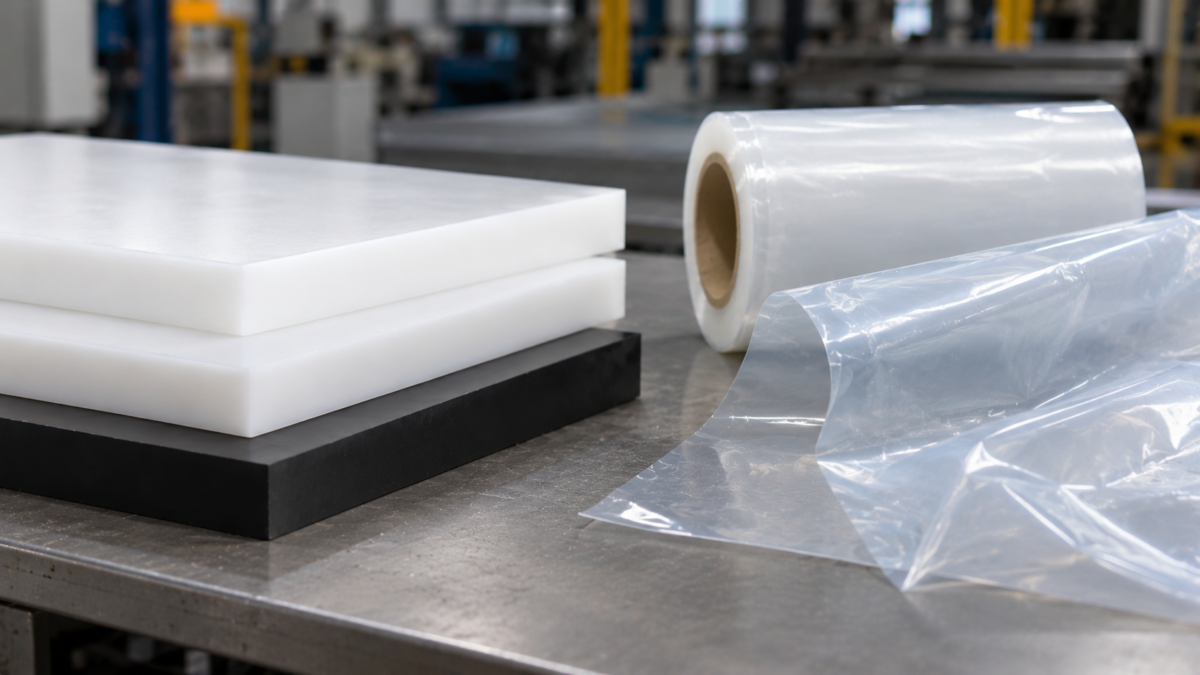
HDPE and LDPE are both polyethylene materials, but they have different molecular structures and physical properties.
Property | HDPE | LDPE |
|---|---|---|
Full name |
High-Density Polyethylene |
Low-Density Polyethylene |
Molecular structure |
Less branching |
More branching |
Density |
Higher |
Lower |
Stiffness |
Generally more rigid |
Generally more flexible |
Tensile strength |
Generally higher |
Generally lower |
Flexibility |
Less flexible |
More flexible |
Common applications |
Sheets, pipes, containers and industrial components |
Films, bags and flexible packaging |
Which Material Should You Choose?
HDPE may be more suitable when your application requires greater stiffness, chemical resistance or structural rigidity.
LDPE may be more suitable when flexibility, softness and film-forming properties are more important.
The best choice depends on the application’s performance requirements rather than simply selecting the material with the higher density.
6. Factors to Consider Before Purchasing HDPE Plastic Sheets
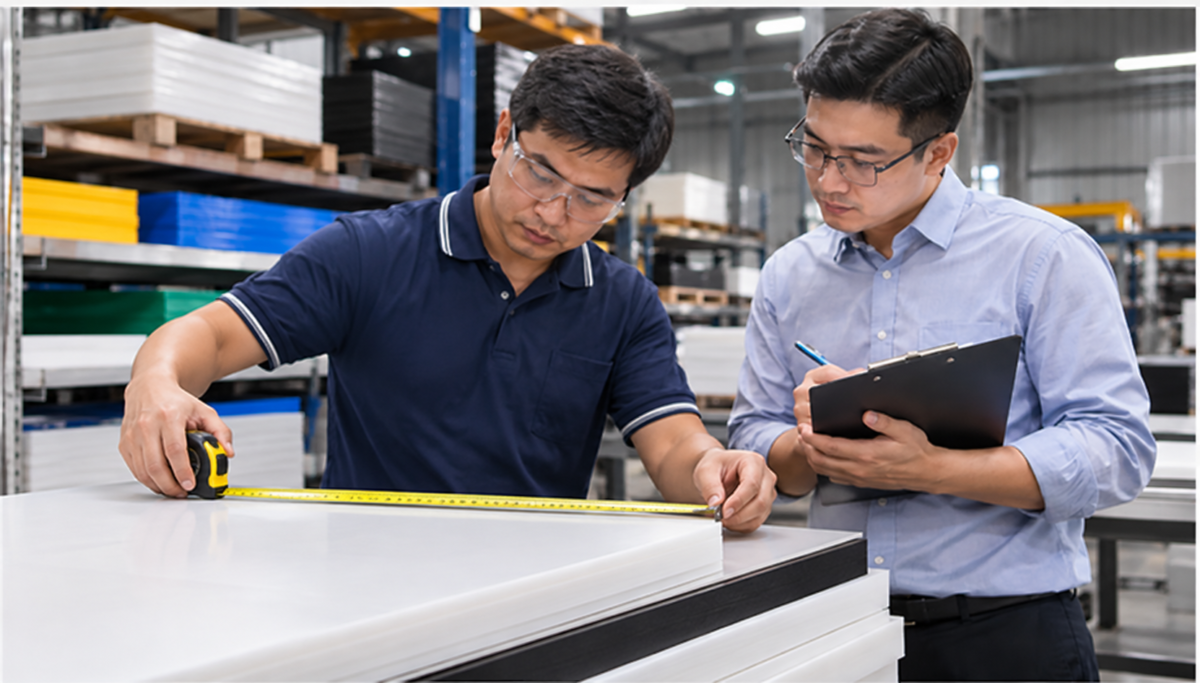
Before purchasing HDPE sheets, businesses should consider several important factors.
Sheet Thickness
The required thickness depends on the application’s mechanical loads, dimensions, installation method and expected operating conditions.
Thicker sheets may provide greater stiffness in certain configurations, but thickness alone does not determine overall performance.
Sheet Dimensions
Confirm the required length, width and thickness before ordering. Correct dimensions can help reduce cutting waste and simplify fabrication.
Material Grade
Different HDPE grades may have different mechanical, chemical and processing characteristics.
Ask for the relevant technical data sheet when material performance is important to your project.
Operating Environment
Consider whether the sheet will be exposed to:
- Chemicals or cleaning agents.
- High or low temperatures.
- Direct sunlight and UV radiation.
- Moisture and outdoor weather conditions.
- Mechanical loads, impact or abrasion.
These factors help determine whether HDPE is suitable for the intended application.
Colour and Surface Requirements
Consider the required colour, surface finish and appearance of the finished product.
Where appearance, light exposure or specific processing requirements matter, confirm the available options with your supplier.
Supplier Reliability
Choosing a reliable plastic supplier is important when sourcing industrial plastic sheets.
Consider whether the supplier can provide relevant product information, material specifications, dimensions and assistance in identifying suitable materials for your application.
7. How to Maintain and Store HDPE Sheets
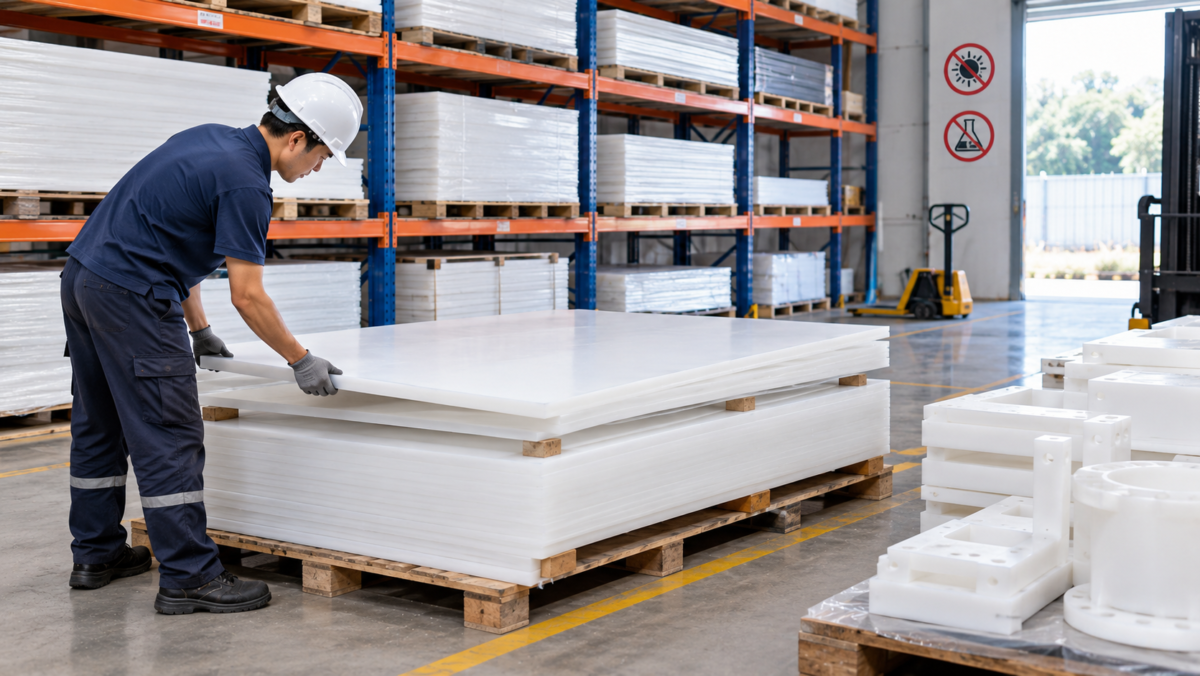
Proper storage and handling can help preserve the condition of HDPE plastic sheets before fabrication and installation.
Consider the following practices:
Store sheets on a flat and properly supported surface.
Avoid placing excessive weight on stored sheets.
Keep materials away from direct sunlight unless they are designed for prolonged UV exposure.
Avoid contact with incompatible chemicals.
Protect sheet surfaces from scratches and physical damage.
Follow the manufacturer’s recommendations for cleaning and maintenance.
For fabricated HDPE components, inspect the material periodically for signs of wear, cracking, deformation or surface damage.
Why Choose GB PLAS as Your Plastic Supplier?
Choosing a suitable plastic supplier is an important part of sourcing materials for industrial and commercial applications.
GB PLAS serves businesses looking for plastic material solutions in Malaysia. When selecting a supplier, it is important to understand the available material options and ensure that the selected product matches your project requirements.
When sourcing HDPE plastic sheets, consider the following:
Material suitability: Confirm that the selected HDPE material is appropriate for your intended application.
Product specifications: Check sheet dimensions, thickness and relevant material information before purchasing.
Application requirements: Consider chemical exposure, temperature, mechanical loads and environmental conditions.
Technical information: Request relevant product documentation to support material selection and fabrication planning.
Whether you are sourcing plastic sheets for manufacturing, fabrication or other industrial applications, selecting the right material is essential for achieving the required performance.
Looking for a Plastic Supplier in Malaysia?
Contact GB PLAS to discuss your plastic sheet requirements and explore suitable material options for your business.
Final Thoughts
HDPE is a versatile plastic material widely used across industrial, commercial and manufacturing applications. Its strength, chemical resistance, low moisture absorption and fabrication flexibility make it a practical choice for many different requirements.
However, selecting the right HDPE sheet requires careful consideration of material grade, thickness, dimensions and operating conditions to ensure it meets your project’s needs.
If you are looking for a reliable plastic supplier in Malaysia, GB PLAS can help you explore suitable plastic sheet options for your business. Contact our team to discuss your requirements and find the right material for your application.
HDPE
Read More ...