
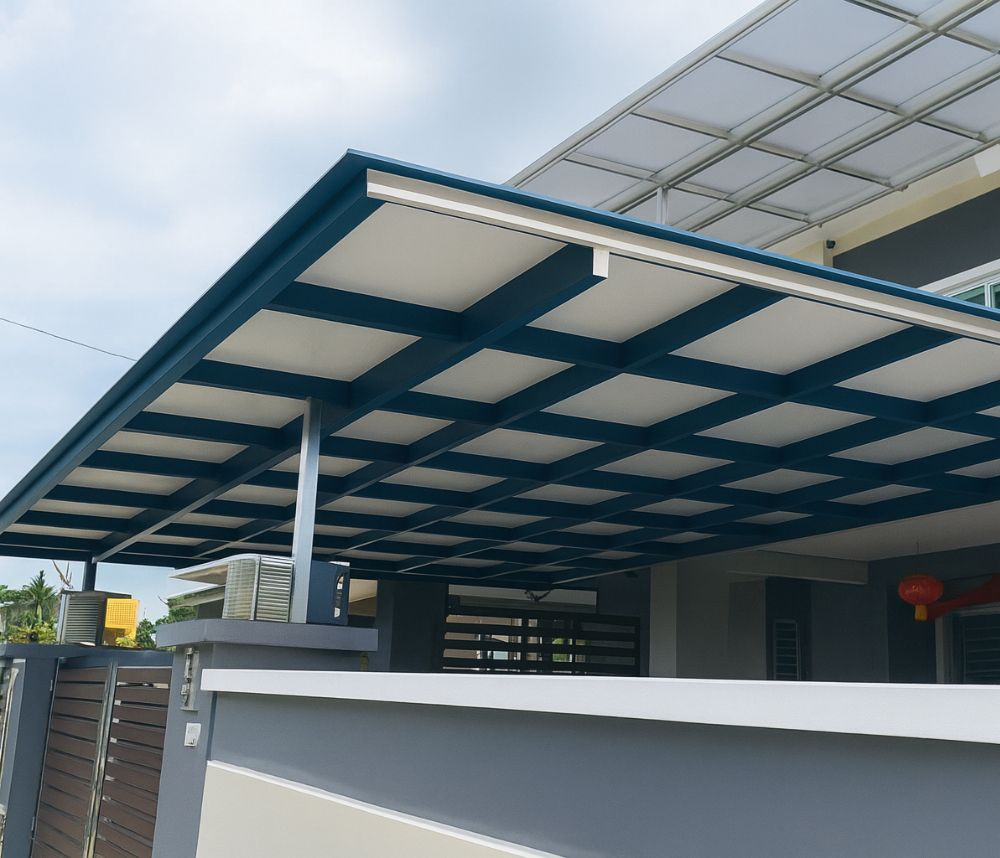
The Great Awning Debate
When it comes to choosing the perfect awning for your home or business, two materials often top the list — Aluminium Composite Panels (ACP) and polycarbonate.
Both are popular for their durability, modern look, and weather resistance. But if you live in Malaysia, where heat, humidity, and heavy rain are part of everyday life, choosing the right one can make a big difference in comfort, maintenance, and long-term cost.
At GB PLAS, we supply high-quality ACP panels and polycarbonate sheets designed to perform in tropical conditions. Let’s explore how these two materials stack up — and which one suits your project best.
Understanding the Materials
What Is an ACP Awning?
An ACP awning is made from aluminium composite panels — two thin aluminium sheets bonded to a polyethylene or mineral core. This combination makes it lightweight, weather-resistant, and stylish, offering a premium architectural finish with minimal maintenance.
Common applications:
- Car porch covers
- Storefront canopies
- Walkways and outdoor seating areas
- Building façades and signage
What Is a Polycarbonate Awning?
Polycarbonate awnings are built from thermoplastic sheets known for their impact strength and light transmission. They are popular for structures that require transparency and natural lighting, like patios, skylights, and greenhouses.
Common applications:
- Residential patios
- Greenhouses
- Skylights and translucent roofs
- Commercial corridors
ACP vs Polycarbonate: Key Comparison
Feature | ACP Awning | Polycarbonate Awning |
|---|---|---|
Durability |
Excellent – corrosion-resistant and rigid |
Very strong, but can yellow over time |
Weight |
Lightweight |
Lightweight |
UV Resistance |
High – aluminium surface reflects sunlight |
High – UV coating blocks harmful rays |
Heat Insulation |
Excellent – reduces indoor heat |
Moderate – allows some heat transmission |
Light Transmission |
Opaque or reflective (no glare) |
Transparent or translucent |
Maintenance |
Very low – easy to clean, no rust |
Moderate – may require cleaning and UV re-coating |
Aesthetic Options |
Matte, metallic, wood-grain, mirror finishes |
Clear, tinted, frosted finishes |
Noise Resistance |
Quiet, even during rain |
Noisy under heavy rain |
Lifespan |
15–20 years with minimal upkeep |
10–15 years depending on UV exposure |
Verdict:
If you need durability, minimal maintenance, and modern appeal, ACP awnings are the better long-term choice. If you prefer natural light and transparency, polycarbonate awnings are ideal.
Why ACP Awnings Are Better for Malaysia’s Climate
Malaysia’s tropical weather presents challenges — intense sunlight, high humidity, and frequent rainstorms.
Here’s why ACP awnings perform exceptionally well in these conditions:
- Heat Reflection – The aluminium surface deflects sunlight, keeping interiors cooler.
- Corrosion Resistance – ACP panels don’t rust or peel, even under constant rain.
- UV Protection – High-quality coatings prevent colour fading and protect the structure beneath.
- Noise Reduction – Unlike metal or polycarbonate roofs, ACP awnings absorb rain noise better.
- Minimal Maintenance – A quick wash is all that’s needed to keep them looking new.
When to Choose Polycarbonate Awnings
Polycarbonate still has its advantages — especially when you want more natural light or a sleek, transparent design.
They work best for:
- Patios and pergolas – where daylight enhances comfort
- Greenhouses – where light diffusion supports plant growth
- Skylights or canopies – where transparency adds a modern aesthetic
However, for long-term outdoor use in Malaysia’s heat, polycarbonate sheets may require more frequent maintenance due to potential yellowing or UV wear.
Design and Aesthetic Considerations
Design Preference | Best Material | Reason |
|---|---|---|
Sleek, modern, matte finish |
ACP |
Architectural elegance with colour options |
Transparent or light-filled |
Polycarbonate |
Allows natural light in |
Wood-look or premium texture |
ACP |
Available in wood-grain and metallic finishes |
Contemporary café or retail canopy |
ACP |
Stylish and weatherproof |
Greenhouse or skylight |
Polycarbonate |
Diffuses sunlight effectively |
Cost and Long-Term Value
While ACP awnings may cost slightly more upfront than polycarbonate, the total lifecycle cost is often lower.
Why? Because they require less maintenance, last longer, and retain their appearance even after years of exposure.
Polycarbonate awnings, on the other hand, may need occasional replacement or UV re-coating — adding to long-term costs.
In short:
- ACP awnings = Best for durability and premium appearance
- Polycarbonate awnings = Best for light transmission and temporary roofing
Why Choose GB PLAS for ACP and Polycarbonate Awnings
At GB PLAS, we’ve spent over 18 years perfecting materials that perform in Malaysia’s tropical environment.
Why architects and contractors trust us:
- ISO-certified manufacturing for consistent quality
- Wide selection of ACP and polycarbonate panels
- Custom sizes and colours to match any design
- Eco-friendly production with recyclable materials
- Proven track record across 60+ countries
Whether you need ACP awnings for style and longevity or polycarbonate roofs for transparency and light, GB PLAS delivers solutions built to last.
Conclusion: Which Awning Should You Choose?
Both ACP and polycarbonate awnings have their strengths, but for Malaysia’s harsh sun and heavy rain, ACP awnings come out on top. They’re quieter, cooler, more durable, and require less upkeep — the perfect balance between design and practicality.
At GB PLAS, we provide premium-grade ACP panels designed for modern awnings, roofing, and façades.
Contact us today for expert advice or a free quotation — and discover how our materials can elevate your next project.
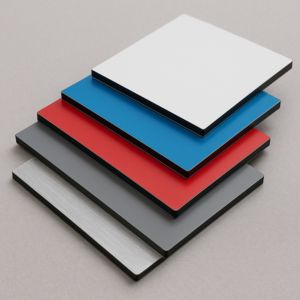
Aluminium Composite Panel (ACP Panel)
Elevate your projects with GB Plas, the industry-leading aluminium composite panel (ACP Panel) crafted for ultimate performance and versatility.
Read More ...